
Indoor vs. Outdoor: How to Choose the Best Media Day Location for Your Team



Media Day Location Takeaways at a Glance
- FBR Media Group, powered by Rob Faber Photography, runs high school and college sports media days on site across Connecticut and Western Massachusetts.
- When you have both indoor and outdoor space available, the right media day location depends on your roster size, the season, the weather, and how you plan to use the images.
- Outdoor locations give you a sense of place, dramatic skies, stadium-light flares, and no backdrop to build. Indoor locations give you control, consistency, and a built-in rain plan.
- Inside the building, the gym floor, the foyer, and any large room with high ceilings each bring something different to the shoot. Many of the best media days use more than one.
When a coach or athletic director books a media day, one of the first questions I ask is simple: where do you want to shoot? Most schools have more options than they realize. There is the field, the track, the stadium, the gym, the front lobby, the cafeteria, and sometimes an auditorium or multipurpose room. Choosing the right media day location shapes the look of the images, the pace of the schedule, and how smoothly the whole day runs.
This guide walks through the real trade-offs between indoor and outdoor locations, what each indoor space does well, and how to decide when you have both on the table. The goal is to help you walk into your planning conversation knowing exactly what to ask for.
Why Your Media Day Location Matters
A media day is a production. I bring studio lighting, modifiers, and a set, then build it once for the day while teams rotate through in scheduled blocks. Because of that, the space is not just a backdrop. It decides how much room I have for light, how many stations can run at once, where athletes wait, and whether the schedule survives a change in the forecast.
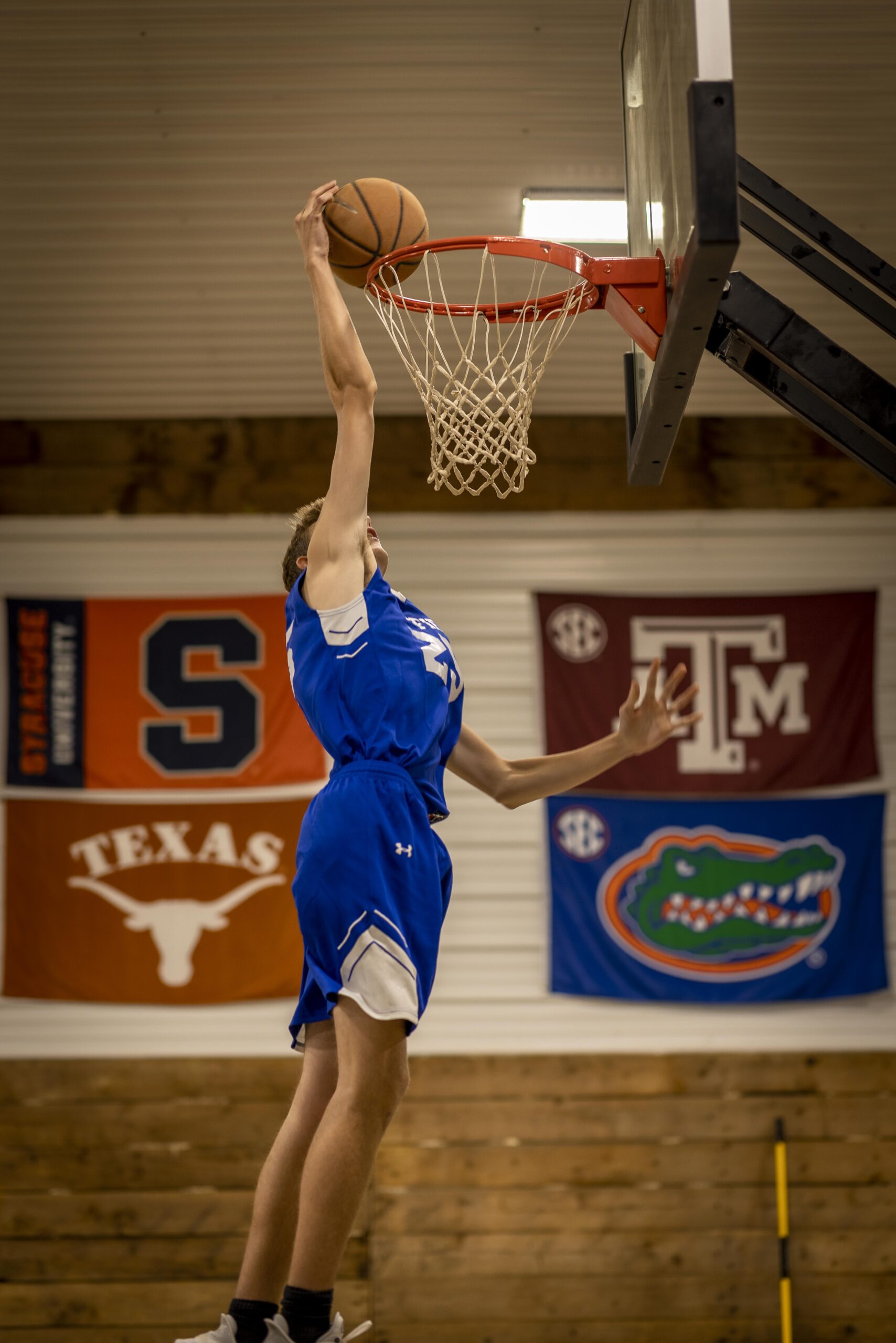
The location also shapes the feel of the final gallery. A gym floor and a game field can produce two completely different sets of images from the same team. Neither is better in every case. The right choice is the one that fits your program, your season, and what you plan to do with the photos.
The Case for an Outdoor Media Day Location
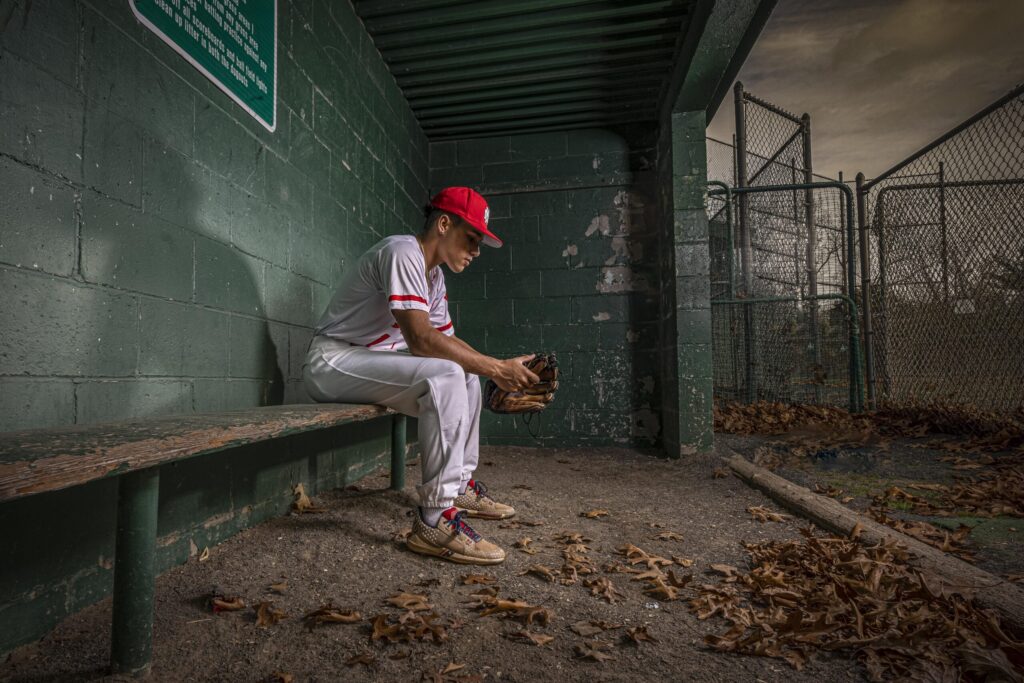
Outdoor locations tell a story about where your team plays. A football player on the field, a runner on the track, or a lacrosse team in front of the home bleachers carries a sense of place that a studio set does not.
What Outdoor Does Well

- Environment and identity. Your field, your stadium, your scoreboard. Outdoor images feel rooted in the program.
- Open space. Full-team photos, wide shots, and action-style poses have room to breathe.
- Lifestyle content. For social media, hype videos, and season announcements, outdoor images often feel energetic and authentic.
Big Skies and Wide Angle Lenses
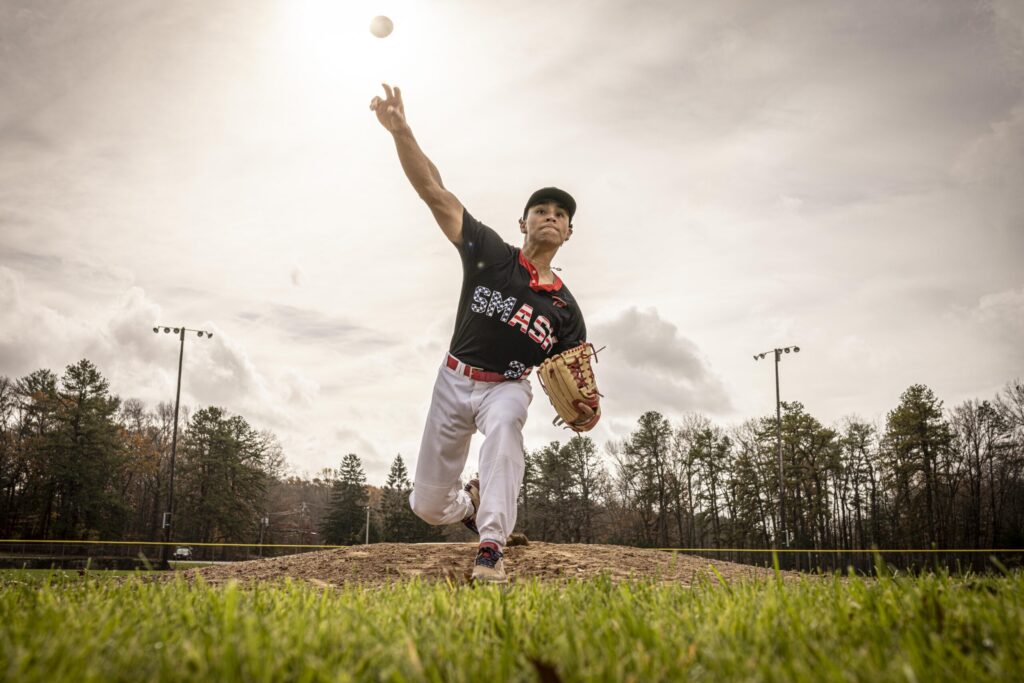
On the right day, the sky becomes part of the set. Puffy, dramatic clouds paired with a wide angle lens create an image that feels larger than life. Shooting from a low angle, the athlete towers over the frame while the clouds stretch out behind them. It is the kind of heroic, poster-style portrait that stops a scroll, and no studio backdrop can replicate it.
Stadium Lights and Natural Flare
Stadium lights add another layer of drama. Positioned in the frame, they create light flares and bursts that give an image a cinematic, game-night energy. As the sun drops and the lights come on, the field takes on a completely different feel, one that looks straight out of a college or pro broadcast. For football, soccer, lacrosse, and any team that plays under the lights, it connects the portrait directly to the moments that matter most. For more on football media days, read what a football media day is all about.
No Backdrop Needed
Outdoors, the location is the backdrop. There is no seamless paper to roll out, no stands to anchor, and no set to build and break down. As a result, setup is lighter, and moving between spots on the field is quick. One team can be photographed at midfield, another in front of the scoreboard, and seniors by the end zone, all without rebuilding anything. That freedom adds variety to the gallery and keeps the session moving.
What to Plan Around Outdoors
- Weather. Rain, wind, and cold can shut down a session or cut it short. In New England, fall and spring forecasts can change by the hour.
- Changing light. The sun moves all day. An image at 2 p.m. will not match one made at 5 p.m., which makes consistency across a large roster harder.
- Wind and equipment. Large light modifiers can act like sails in a breeze, so stands need to be weighted and watched.
- A backup plan. Every outdoor media day needs an indoor alternative ready to go, ideally confirmed with the building before the day arrives.
Outdoor locations shine for teams whose identity is tied to their field, and for hero shots and lifestyle content. However, they work best when they are a planned part of the day, not the only option.
The Case for an Indoor Media Day Location
Indoor locations give you something outdoor cannot: control. The light I build for the first athlete is the same light the last athlete steps into, whether it is sunny, pouring, or dark by 4:30.
What Indoor Does Well
- No weather risk. The schedule holds regardless of the forecast, which matters when you are coordinating multiple teams, coaches, and families.
- Consistency. Every athlete is lit the same way, so rosters, programs, team-page grids, and game day graphics all match.
- Efficiency. A controlled space lets me set up once and keep teams moving through in scheduled blocks. That consistency is what makes a school-wide media day possible. At Granby Memorial High School, we photographed six teams and 150 athletes in a single day.
- Dramatic, studio-quality light. Indoors, I can shape light for the cinematic, college-style look most athletes are hoping for.
Within the building, though, not every space is the same. Here is what each common indoor option brings to a media day.
The Gym Floor: Reflections and Room to Work
For many programs, the gym is the natural first choice, and for good reason.

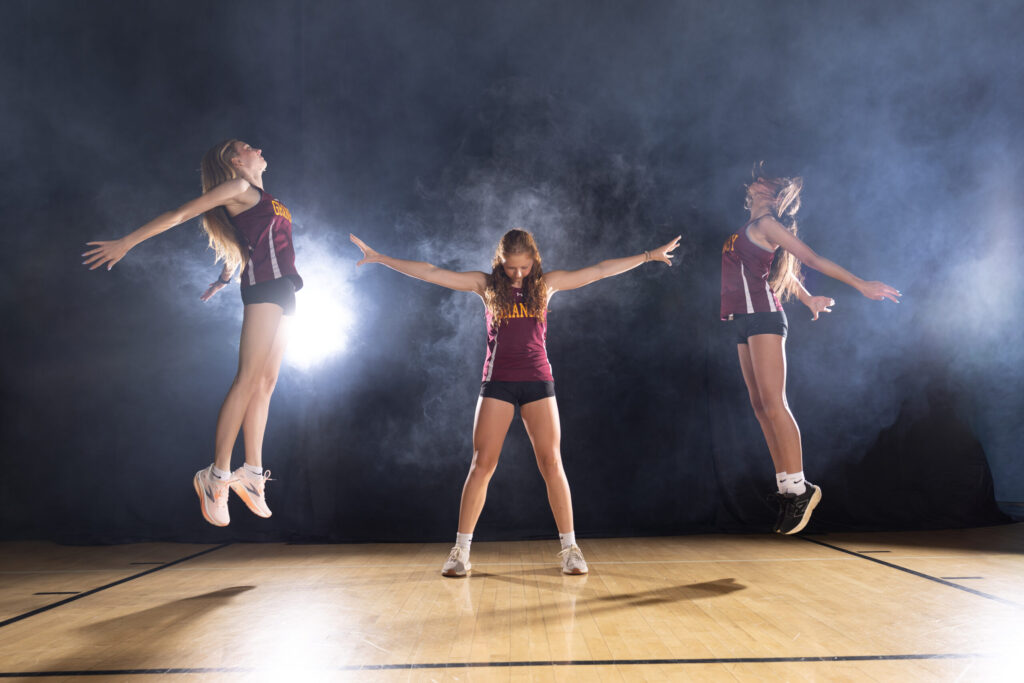
A polished gym floor creates reflections. When the light hits that surface, athletes get a subtle mirror image beneath them that adds depth, polish, and a dramatic, cinematic feel. It turns a standard pose into something that looks like it belongs on a college athletics account.
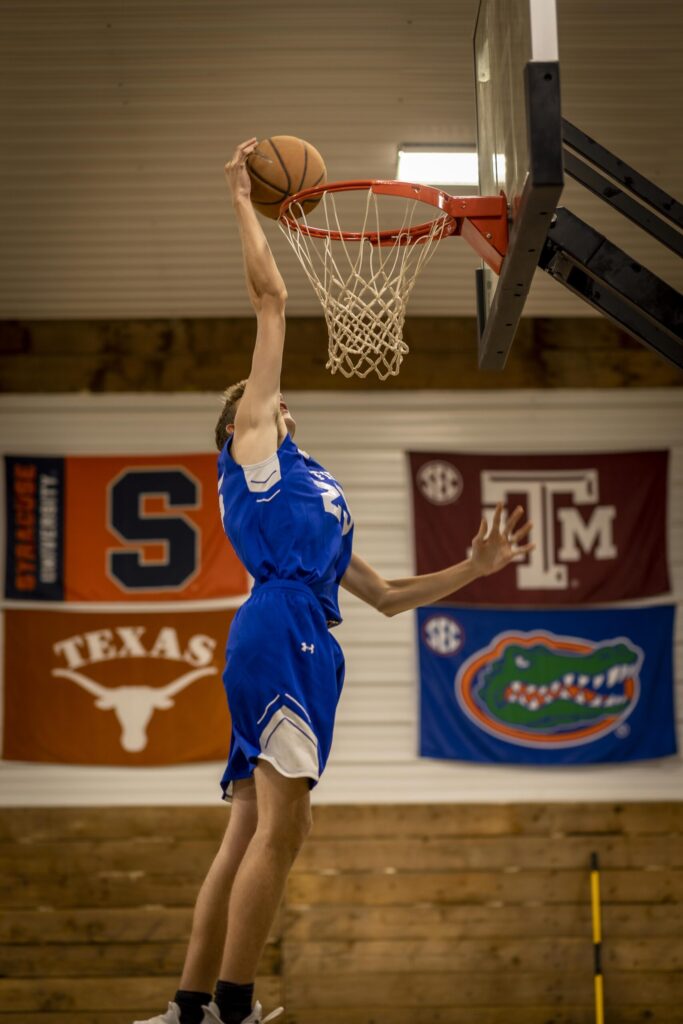
The gym also offers space. There is room to run individual portraits, small groups, and full-team photos without breaking down the set. For basketball and volleyball, it is home court, so the setting feels authentic. For more on basketball media days, read What Is Sports Media Day? Basketball Focus. For every other sport, it works as a strong, neutral stage that keeps the focus on the athlete.
The main thing to plan around is scheduling. Gyms are in high demand for practices, physical education classes, and events, so it is worth booking the space early and confirming it with your athletic department.
The Foyer: Ideal for Small Teams and Quick Stations
A front lobby or foyer is often overlooked, yet it can be one of the most useful spaces on a media day.
Foyers work well for smaller teams, such as golf, tennis, cross country, swimming, or individual event groups. They are also a good fit for focused shoots like captains, seniors, or coaching staff. A tighter footprint keeps energy high and the line moving, and it is easy for athletes to find.
On a busy school-wide day, the foyer can also serve as a second station. For example, while one team works through the main set, another can be photographed in the foyer. As a result, the overall schedule moves faster.
A Large Room With High Ceilings: Flexibility for Light
A cafeteria, auditorium, or multipurpose room can be an excellent media day location, especially when the ceilings are high.
High ceilings give lighting room to work. Lights can be raised higher, larger modifiers can be used, and light can be shaped from above for a sculpted, editorial look. Low ceilings, on the other hand, limit where lights can go and can cause light to bounce in ways that flatten the image.
This is true of every indoor option on this list, not only the big room. The gym, the foyer, and a large room all benefit from height. In fact, when you scout a space for your media day, ceiling height is one of the most valuable things to note.
A large room also allows for more than one look in the same day. For instance, one side of the room might hold a clean backdrop station while the other holds a darker, more dramatic setup. Teams can move between them without losing time.
How to Choose the Right Media Day Location
If you have both indoor and outdoor space available, a few practical questions will point you in the right direction.
How Many Athletes Are You Photographing?
Large rosters and multi-team days benefit from the efficiency and consistency of an indoor location. A single small team has more flexibility to work outdoors.
What Time of Year Is It?
Fall and spring outdoor sessions in Connecticut and Massachusetts carry weather risk. Winter sports almost always belong inside. If you choose outdoor, confirm your indoor backup in advance.
How Will the Images Be Used?
Roster photos, programs, and team pages need consistency, which favors indoor light. Social media, hype content, and senior night graphics can benefit from the atmosphere of an outdoor setting.
What Feel Fits Your Program?
Clean and polished, or gritty and environmental? The location should match how your program wants to be seen.
How Will the Day Flow?
Think about where athletes will wait, where they can change into uniforms, and how teams will move in and out without crossing paths. A great space with no room for a line can slow the whole day down.
The Best of Both: Using Indoor and Outdoor Together
Often the strongest answer is not one or the other. It is both.
A common approach is to photograph individual and roster images indoors, where light stays consistent, then rotate teams, captains, or seniors outside for hero shots and lifestyle images. If the weather turns, the indoor set is already built and nothing is lost. In that sense, indoor becomes the plan and outdoor becomes the bonus.
When we plan your media day together, I will ask about your spaces, your rosters, and your schedule, then recommend a layout that gets the most out of your building and your field.
Frequently Asked Questions
Is indoor or outdoor better for a team media day?
Both can work well. Indoor locations offer consistent lighting, efficiency, and no weather risk, which makes them ideal for larger rosters and multi-team days. Outdoor locations add a sense of place, dramatic skies, and stadium-light energy, and they work beautifully for hero and lifestyle shots. Many programs use both.
What happens if it rains on our media day?
If the day includes an outdoor portion, we plan an indoor backup in advance. Because the main set can be built inside, rain does not have to cancel the session. It simply moves the outdoor shots inside or to another day.
What makes a good indoor space for a media day?
Look for high ceilings, enough floor space for the set and a waiting line, access to power, and a nearby area for athletes to change. A polished gym floor adds attractive reflections, and a foyer works well for small teams or a second station.
Can we use more than one location in the same day?
Yes. Running a main set in the gym or a large room alongside a smaller station in the foyer, or adding an outdoor segment, can keep teams moving and give you more variety in the final gallery.
Do you come to our school?
Yes. FBR Media Group runs media days on site for schools and programs across Northern Connecticut and Western Massachusetts. I bring the lighting and the set and build it in the space that works best for your teams.
Find the Right Media Day Location for Your Program
The right media day location sets the tone for everything that follows: the look of the images, the pace of the day, and how confident your athletes feel when they step into the light. Whether that means a gym floor full of reflections, a foyer station for your smaller teams, or a quick trip out to the field, the best plan is the one built around your program.
To see what a media day looks like, visit my Media Day page. When you are ready to plan, reach out through my contact form and we will map out your spaces, rosters, and schedule together. For more planning help, read [what a high school sports media day is](INSERT LINK TO WHAT IS A SPORTS MEDIA DAY POST), [what to wear to media day](INSERT LINK TO WHAT TO WEAR POST), and [when to book your media day](INSERT LINK TO WHEN TO BOOK POST).
And for more behind-the-scenes conversations on portraits, business, and building something that lasts, subscribe to the Shoot for Succession podcast, available on all major podcast platforms.
META DESCRIPTION DELETE WHEN COPIED
Focus Keyword:
Meta Description: Indoor or outdoor? Learn how to choose the best media day location for your team, from gym floors to foyers, with tips from FBR Media Group in CT and MA.


Serving Suffield, CT, and surrounding areas, Rob Faber Photography specializes in one-of-a-kind portraits for professionals, athletes, and high school seniors. This blog highlights sessions from across Connecticut and Massachusetts, including West Hartford, Glastonbury, and the Cape Cod shoreline. Every entry showcases the artistry and attention to detail behind Rob’s Signature Black Label Experience—transforming everyday moments into extraordinary artwork for your home.
Connecticut Portrait Photography Stories & Inspiration"
"I am a huge Rob Faber fan!"
He did an amazing job with my new headshots and pictures for my website. He took my ideas and vision to the next level. He was patient, had great ideas and suggestions and was really able to capture "me"! Rob is truly an artist behind the camera and I cannot recommend him enough. If you are in need of a photographer, Rob is definitely your guy! He will help elevate the look of your business to the next level.
Chris Latournes
"Rob is great to work with!"
He can do it all! Whether he is capturing a special family moment, sporting event or a senior portrait he does it seamlessly and makes the experience fun!
We’ve worked with Rob many times and he always delivers excellent portraits. Each photo always tells a story and beautifully captures the moment.
Danielle Delpha
"Rob is an amazing photographer"
Rob is an amazing photographer, both technically and creatively. He knows how to make you comfortable during the shoot, and to bring out your own unique personality. Not only did he have so many of his own incredible ideas for the shoot, but he was also more than willing to collaborate for my vision as well. A top-notch experience from start to finish. Highly recommended.
Lee Totten
more about Rob
I’ve always believed that good work speaks for itself. Photography, for me, has never been about chasing trends or high-volume sessions — it’s about creating portraits with clarity, purpose, and staying power.
The kind of images you print, frame, and live with. This page is a closer look at how I work, what I care about, and what you can expect when we work together.
Rob FAber
Meet the Artist

Have a story to tell? I’d love to hear it. Let’s begin with a simple note.
Headshots and
Corporate Portraits


