
Why Your AI Headshot Could Cost You the Meeting
AI Headshot Takeaways at a Glance
- Rob Faber Photography is a Peter Hurley trained headshot photographer serving professionals and teams across Northern Connecticut and Western Massachusetts, including Suffield, Simsbury, West Hartford, and Glastonbury.
- An AI headshot rarely loses you anything the day you upload it. The cost shows up later, in the first few seconds of a video call or a handshake, when the person in front of someone does not match the photo they saw.
- That small mismatch raises a quiet question you never want a client or hiring manager asking: what else here is not quite real?
- The fix is not complicated. Your headshot should be an accurate preview of the person who shows up, with the confidence and polish brought out through direction, not generated by software.
Here is a scene I think about a lot. A hiring manager has your resume open in one tab and your LinkedIn profile in the other. A potential client clicks on the team page before a discovery call. A conference organizer pulls up your photo to put in the program. In every one of those moments, your headshot is doing the introducing. And if that headshot is an AI headshot, it may be setting up an expectation you cannot meet when the meeting actually starts.
I already wrote an honest comparison of AI headshots and working with a photographer, where I gave AI credit for what it does well. This post is narrower. It is about one specific moment, the moment someone who has seen your photo meets the real you, and why that moment is where an AI headshot tends to cost people the most.
The Meeting Starts Before You Say Hello
Most professional relationships today begin with a look-up. Before a first call, people check your profile. Before an interview, they scan your page. Before a referral, they glance at your photo to put a face to the name. By the time you join the meeting, they already have a picture of you in their head, literally.
That picture shapes the first few seconds. When you appear on camera or walk into the room, the other person’s brain does a fast, automatic comparison. Is this the person I expected? If the answer is yes, they relax and move on to the conversation. If the answer is “sort of,” something small catches.
Nobody stops the meeting to say, “You look different from your photo.” They just carry a little extra caution into the next half hour. And in a first meeting, that extra caution is the last thing you want working against you.
Where an AI Headshot Creates the Gap
An AI headshot is built from photos you already have. Software studies your face and generates new images of a polished version of you, often in clothing, light, and settings that never existed. The results can be impressive at a glance. The trouble is in the details that only show up when a real person is standing next to the image.
Your Face Drifts a Little
AI tends to adjust features in ways that are hard to name but easy to feel. The jaw gets a touch sharper. The skin gets smoother than skin actually is. The eyes shift shape slightly, or the nose loses a little character. Each change is small. Together, they produce someone who looks like a close relative of you.
When people meet you after seeing that image, they are not consciously comparing your jawline. They just sense that the photo was a little too perfect, and the real person is a little different. That is the gap.
The Expression Was Never Yours
The expression in an AI headshot is a guess. It is assembled from your existing photos and from what the software believes a confident professional looks like. That can produce a pleasant face, but it is not the specific way you look when you are engaged, listening, and enjoying a conversation.
In a real session, the expression is the whole point. I coach it frame by frame: posture, the forward-and-down jaw movement, Peter Hurley’s Squinch, and a fair amount of real conversation and laughter until something genuine shows up on screen. That expression is one you actually make, which means it is the one people will see when they meet you. An AI headshot cannot borrow an expression from the future.
The Light Belongs to No Room on Earth
AI-generated light often looks clean in a strange way, bright and flawless, with no clear source and no real shadows. It reads as polished on a phone screen. Next to a real video feed, it can read as staged. Real light, placed with intention around your face, gives the image dimension and weight. My key, fill, and kick setup is built around your features specifically, so the shape of your face in the photo is the shape of your face in real life.
Why the Gap Costs More Than You Think
A mismatched photo might sound like a cosmetic problem. In practice, it touches the things professional decisions are built on.
It Raises a Trust Question at the Worst Time
I teach business and marketing by day, and one of the first ideas my students learn is that a brand is a promise. When the product matches the promise, trust grows. When it does not, people start reading everything else more skeptically.
Your headshot is a promise about who will show up. If the first thing someone learns about you in person is that your photo was not quite accurate, it is natural for them to wonder what else was polished a little past the truth. Your resume, your results, your case studies. It is not fair, and they may not even realize they are doing it, but it happens.
It Signals a Shortcut
People who hire, refer, and buy for a living have seen a lot of profile photos, and many of them have learned to spot generated images. To some of them, an AI headshot quietly suggests that you took the fastest available route on the one image that represents you everywhere. If they are evaluating whether you pay attention to details, that is not the message you want to send before you have even spoken.
It Undercuts the Exact Moment You Prepared For
You can rehearse your pitch, research the company, and plan your questions, and still begin the meeting slightly on the back foot. The irony is that the photo was supposed to help. Instead, it creates a small hurdle you have to clear before the real conversation starts.
What Your Headshot Should Do Instead
A strong headshot does not make you look like someone else. It makes you look like yourself on your best day, so that when people meet you, the reaction is recognition rather than recalibration.
Accurate, Then Elevated
The goal is accuracy first. Your face, your hair as you actually wear it, your glasses if you wear them every day. From there, everything else lifts the image: light that shapes your features, an expression that reads confident and approachable, and posture that looks natural rather than posed. None of that changes who you are. It simply shows you at your most engaged.
Directed, Not Generated
The difference between a photo that flatters you and one that replaces you is direction. I shoot tethered, the same way we worked at Peter Hurley’s Headshot Intensive in Cambridge, Massachusetts. Every frame appears on a large screen as we go. You see exactly what I see, and we adjust together until the image feels right. That process is how you get a portrait that is polished and still unmistakably you.
Retouched With a Light Hand
My retouching happens in Lightroom, and it is deliberately restrained. I clean up temporary things like a stray hair, a small blemish, or lint on a jacket. I do not reshape features, and I do not smooth skin until it looks like plastic. If someone meets you after seeing your headshot, they should recognize you instantly. That is the standard.
A Quick Test for the Photo You Are Using Now
If you are not sure whether your current photo, AI or otherwise, is helping or hurting, try this. Open your profile photo, then turn on your laptop camera and look at the two side by side.
- Would a stranger know it is the same person within a second? If they would need a moment to connect the two, the gap is there.
- Does the photo match how you look this year? Hair, glasses, beard, and weight all change. Your headshot should change with them.
- Is the expression one you actually make? If you have never looked quite like that in a meeting, people will notice when you do not look like that in theirs.
- Does it fit the rest of your brand? Your website, your bio, and your team page should all tell the same story.
If any of those answers make you hesitate, it is probably time for an updated portrait.
A Real Example of the Photo Doing Its Job
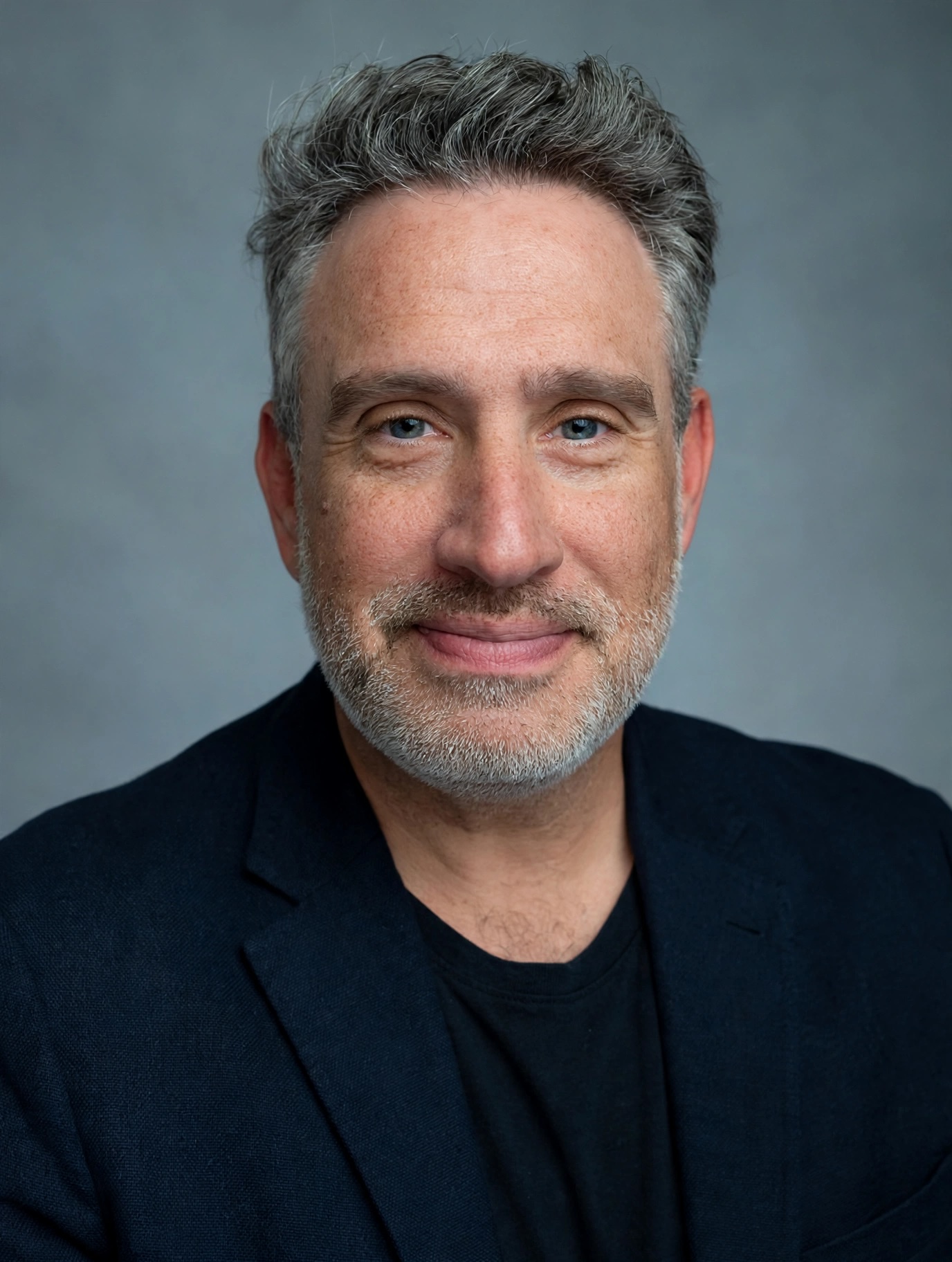
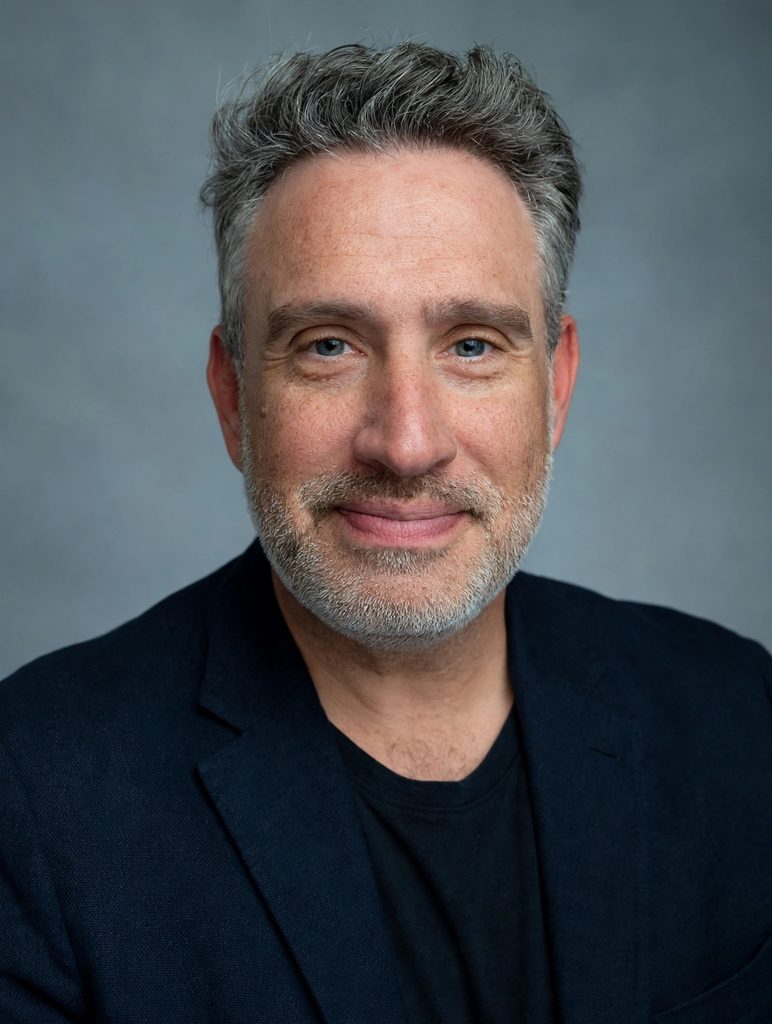
When a headshot is accurate and strong, it simply gets out of the way. My client Brian updated his LinkedIn profile with the headshot from our session, and a month later he landed a new job. His experience earned that role. The headshot did something quieter: it made sure that when recruiters and hiring managers clicked on his profile, and later met him, the professional they saw was the one who showed up. No gap, no recalibration, just a clean first impression.
AI Headshot Concerns for Teams
For companies, the stakes multiply. If a team page mixes AI headshots with real photos, or uses AI images generated from each person’s own selfies, the inconsistency is obvious. Some faces look plastic, others look real, and the light changes from person to person. Clients often browse that page right before a first call, and every mismatch between the page and the people on the call adds up.
A single team session with one controlled lighting setup solves that. Every person is lit, framed, and backed the same way, from the founder to the newest hire, and every person looks like themselves.
Frequently Asked Questions
Can people really tell when a headshot is AI generated?
Often, yes. Overly smooth skin, slightly altered features, and light that does not come from anywhere are common giveaways. Even when someone cannot pinpoint it, they tend to notice when the person on the video call does not quite match the photo.
Is using an AI headshot dishonest?
Not necessarily, and I do not think most people mean it that way. The issue is practical rather than moral. A headshot exists to introduce you accurately, and an image that drifts from your real appearance works against that goal at the moment it matters most.
What if I already use an AI headshot on LinkedIn?
That is fine. Plenty of people used one as a placeholder. When you are ready, replace it with a real portrait and use the same image across LinkedIn, your website, and your email signature so people see one consistent version of you. My headshots for LinkedIn guide covers what makes a profile photo work.
I am not comfortable in front of a camera. Isn’t AI easier?
It can feel easier, but it skips the part that makes a headshot look like you. You do not need any experience for a session. I direct every step, and because we shoot tethered, you see the images as we work and can watch your own confidence build on screen.
Do you photograph teams in CT and MA?
Yes. I photograph individual professionals and full teams throughout Northern Connecticut and Western Massachusetts, including Suffield, Simsbury, West Hartford, and Glastonbury, with consistent lighting, background, and framing for every person.
How do I book a headshot session?
Fill out my contact form, and I will send over more information. From there, we will talk through your goals, where your headshot will be used, and how to plan a session around them.
Let the Real You Walk Into the Meeting
An AI headshot can look good in a thumbnail. The real test comes later, when someone who has seen your photo meets the person behind it. A portrait that matches you, lit with care and directed until the expression is genuinely yours, lets that moment pass without a second thought, so the conversation can start on solid ground.
If you are ready for a headshot that holds up in person, explore my professional headshot sessions, then reach out through my contact form to start the conversation. For the broader comparison, read my honest take on AI headshots vs. a professional photographer. And if the camera is the part that makes you nervous, my guide for people who hate having their picture taken walks through exactly how a session feels.
For more behind-the-scenes conversations on portraits, branding, and business, subscribe to the Shoot for Succession podcast, available on all major podcast platforms.


Serving Suffield, CT, and surrounding areas, Rob Faber Photography specializes in one-of-a-kind portraits for professionals, athletes, and high school seniors. This blog highlights sessions from across Connecticut and Massachusetts, including West Hartford, Glastonbury, and the Cape Cod shoreline. Every entry showcases the artistry and attention to detail behind Rob’s Signature Black Label Experience—transforming everyday moments into extraordinary artwork for your home.
Connecticut Portrait Photography Stories & Inspiration"
"I am a huge Rob Faber fan!"
He did an amazing job with my new headshots and pictures for my website. He took my ideas and vision to the next level. He was patient, had great ideas and suggestions and was really able to capture "me"! Rob is truly an artist behind the camera and I cannot recommend him enough. If you are in need of a photographer, Rob is definitely your guy! He will help elevate the look of your business to the next level.
Chris Latournes
"Rob is great to work with!"
He can do it all! Whether he is capturing a special family moment, sporting event or a senior portrait he does it seamlessly and makes the experience fun!
We’ve worked with Rob many times and he always delivers excellent portraits. Each photo always tells a story and beautifully captures the moment.
Danielle Delpha
"Rob is an amazing photographer"
Rob is an amazing photographer, both technically and creatively. He knows how to make you comfortable during the shoot, and to bring out your own unique personality. Not only did he have so many of his own incredible ideas for the shoot, but he was also more than willing to collaborate for my vision as well. A top-notch experience from start to finish. Highly recommended.
Lee Totten
more about Rob
I’ve always believed that good work speaks for itself. Photography, for me, has never been about chasing trends or high-volume sessions — it’s about creating portraits with clarity, purpose, and staying power.
The kind of images you print, frame, and live with. This page is a closer look at how I work, what I care about, and what you can expect when we work together.
Rob FAber
Meet the Artist

Have a story to tell? I’d love to hear it. Let’s begin with a simple note.
Headshots and
Corporate Portraits


