

Glasses in Headshots: Keep Them On or Take Them Off?
Glasses in Headshots Takeaways at a Glance
- Rob Faber Photography is a Peter Hurley trained headshot photographer serving professionals and teams across Northern Connecticut and Western Massachusetts, including Suffield, Simsbury, West Hartford, and Glastonbury.
- The simplest rule for glasses in headshots: if people see you in your glasses every day, they should see you in them in your headshot.
- Glare, reflections, and lens distortion are lighting and posing problems, and nearly all of them are solved in the studio, not in retouching.
- When you are on the fence, we photograph both ways, review every frame together on screen, and you choose the version that feels most like you.
A few days before a session, I often get a message that starts with a little hesitation: “Quick question. Should I wear my glasses?” It is one of the most common questions I hear, and it deserves a better answer than a quick yes or no. Glasses in headshots can look sharp, intelligent, and completely natural, or they can bring glare, odd reflections, and shadows that pull attention away from your eyes.
Whether your frames stay on is a question about identity. How they look on camera is a question about light and angles, and that part is my job.
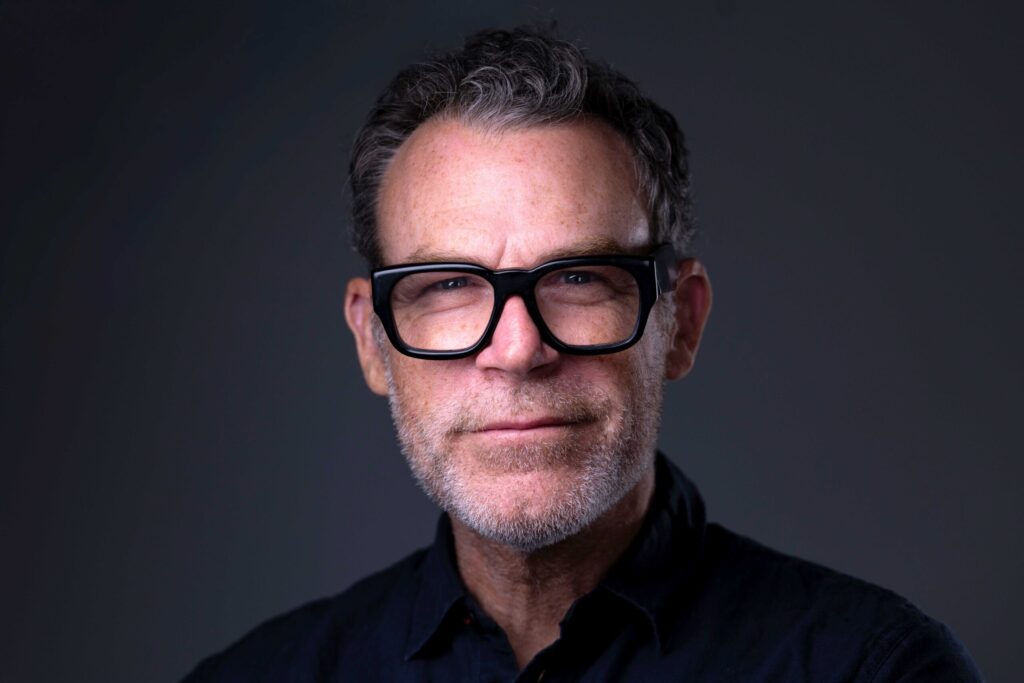
Start With Recognition, Not Vanity
Before we get into lighting, ask yourself one question: how do people see you on a normal Tuesday?
A headshot introduces you before you arrive. If a client or hiring manager sees your photo and then meets you on a video call, the two should match instantly. If you wear glasses at your desk and on every call, a headshot without them creates a small moment of disconnect.
I teach business and marketing by day, and brand consistency comes up in my classroom constantly. For many people, their frames are part of their face and as recognizable as their name. Taking them off for the photo can make you less memorable, not more polished.
On the other hand, if you only wear glasses for reading or driving, there is no reason to put them on just for the camera. Wear them in your headshot the way you wear them in your life.
The Real Concerns With Glasses in Headshots
Most people who hesitate about glasses in headshots are not worried about the frames themselves. They are worried about what the camera might do to them. Those concerns are fair, so let’s take them one at a time.
Glare and Reflections
This is the big one. Lenses act like small mirrors. If a light sits in the wrong place, it shows up as a bright patch right over your eyes, and your eyes are the most important part of the frame. You may also see reflections of windows, softboxes, or even the room behind me.
Glare follows a simple rule: the angle the light hits the lens is the angle it bounces off. Once you understand that, you can control it. That is why I treat glare as a lighting decision rather than something to fix later.
Lens Distortion
Prescription lenses bend light, and on camera that can change how your eyes and face read. Lenses for nearsightedness tend to make the eyes look a little smaller and can create a visible step where the edge of your face appears inside the lens. Lenses for farsightedness can make the eyes look slightly larger.
It is simply what lenses do, and the people who know you see it every day. Posing and camera angle can make it far less noticeable.
Shadows, Tints, and Coatings
Thick frames can cast shadows under the brow or sit right across your eyes at certain angles, which a small change in head position usually solves. Light-adaptive lenses can darken on location, and strongly coated lenses can throw a green or purple sheen, so mention either when we plan your session.
How I Handle Glasses in the Studio
When I trained at Peter Hurley’s Headshot Intensive in Cambridge, Massachusetts, we spent a lot of time moving lights in small increments and watching exactly what happened to the face. That habit is what makes glasses manageable. The fix is rarely dramatic. It is usually a few inches here and a slight tilt there.
Placing the Light Where the Lens Can’t See It
My lighting is built around a key light, a fill, and a kick, and each one can be moved independently. With glasses, I place the key light higher and wider so its reflection bounces away from the camera instead of straight into it. If the fill creates a hot spot, it moves too. If a kick light catches the edge of a lens, I adjust it until it only catches your hair and shoulders.
In my Back in Black studio style, with rich shadows, soft directional light, and dark backgrounds, this matters even more. A bright reflection stands out sharply against a dark frame, so I take extra care that the only highlights in your lenses are ones that look intentional.
Small Adjustments to the Frames and Your Head
Sometimes the cleanest fix is the glasses themselves. Lifting the arms of your frames slightly off the tops of your ears tilts the lenses down just enough to send reflections toward the floor instead of the lens. From the front, nobody can tell. I may also ask you to bring your forehead slightly forward and down, which is something I coach in nearly every session anyway because it defines the jawline. With glasses, that same movement often clears glare at the same time.
Tethered Shooting Means No Guessing
I shoot tethered, the same way we worked at the Headshot Intensive, so every frame appears on a large screen as we go. With glasses in headshots, that is a huge advantage. If a reflection appears, we both see it immediately and fix it before we move on. You never leave the session wondering whether glare ruined your best expression.
Your Eyes Still Have to Do the Work
Glasses frame your eyes, but they do not replace what your eyes need to communicate. Confidence and warmth still have to come through the lenses.
Peter Hurley’s Squinch, a subtle lift of the lower eyelids, is one of the most useful tools I use with every client, and it works beautifully with glasses. A wide, uncertain look can get magnified behind lenses, especially with a stronger prescription. A slight squinch reads as focused and self-assured, and it keeps the expression from feeling startled. Combined with a relaxed mouth and real conversation during the session, it brings your personality through clearly, frames and all.
Why Retouching Isn’t the Fix
Some people assume glare can simply be erased afterward. Occasionally a small reflection can be cleaned up, but heavy glare over the eyes is a different story. When a reflection covers part of an eye, the detail underneath is gone. Rebuilding it means inventing part of your face, and that runs against everything I believe about retouching.
I retouch with a light hand in Lightroom. The goal is always you on your best day, not a reconstructed version of you. That is exactly why I solve glasses with light and angles during the session. Getting it right in the camera means your eyes stay real.
Keep Them On or Take Them Off? A Simple Way to Decide
If you are still unsure, here is how I usually guide the decision:
- You wear glasses all day, every day. Keep them on. This is how people know you.
- You switch between glasses and contacts. Think about which version shows up in meetings and on video calls most often, and lead with that one.
- You only wear glasses for reading or screens. Leave them off. There is no need to add them for the photo.
- You are considering a change. If you are about to get new frames, switch to contacts, or have vision surgery, time your headshot so it reflects how you will look going forward.
- You honestly can’t decide. We photograph both ways. Seeing yourself on screen often makes the choice obvious within a few frames.
Shooting both ways is easy to build into a session, and it gives you options for different uses.
Glasses in Headshots for Teams
When I photograph a team, some people wear glasses and some do not, and that is perfectly fine. I adjust the light for each person who wears frames rather than forcing everyone into one fixed setup, while the background and framing stay the same for all. The glare control is individual, and the team page still looks unified from the first portrait to the last.
How to Prepare Your Glasses for a Session
A few small steps make a noticeable difference:
- Clean your lenses well before you arrive, and bring a microfiber cloth. Smudges and fingerprints show up on camera more than you would expect.
- Check the fit. If your frames slide down your nose or sit crooked, a quick adjustment at your optician beforehand helps them sit level.
- Bring every pair you wear regularly. If you alternate between two styles, bring both and we can see which one suits the image.
- Bring contacts if you use them. If you want options both ways, having them with you keeps the session flexible.
For clients who want every detail handled, my Black Label Experience is guided from wardrobe through final delivery, and decisions like glasses and frame choice are part of the planning conversation well before you arrive.
Frequently Asked Questions
Should I wear glasses in my headshot?
If you wear glasses most of the time, yes. Your headshot should look like the person people meet in meetings and on video calls. If you only wear them occasionally, such as for reading, leave them off. When you are unsure, we can photograph both ways and decide together.
How do you avoid glare on glasses in headshots?
Glare is controlled with light placement and small adjustments to angle. I position the lights higher and wider so reflections bounce away from the camera, and sometimes tilt the frames slightly by lifting the arms off the ears. Because I shoot tethered, we see every frame on screen and fix any reflection immediately.
Can glare be removed in editing?
Small reflections can sometimes be cleaned up, but heavy glare that covers the eyes cannot be fixed naturally, because the detail underneath is lost. That is why I solve glare in the studio rather than relying on retouching. My retouching stays light so your headshot still looks like you.
Do you photograph teams in CT and MA?
Yes. I photograph individual professionals and full teams throughout Northern Connecticut and Western Massachusetts, including Suffield, Simsbury, West Hartford, and Glastonbury. For teams, I adjust the light for each person who wears glasses while keeping the overall look consistent across the group.
How do I book a headshot session?
Fill out my contact form, and I will send over more information. From there, we will talk through your goals, your glasses, and the look you want your headshot to have.
Frames On, Confidence Up
Glasses in headshots are not a problem to hide. They are part of how people recognize you, and with careful light and a little direction, they can make a portrait feel more personal and more distinctive. The decision to keep them on or take them off should be about who you are. Making them look great on camera is my job.
If you are ready for a headshot that looks like you on your best day, glasses included, explore my professional headshot sessions, then reach out through my contact form to start the conversation. If LinkedIn is where your headshot will work hardest, my headshots for LinkedIn guide is a great next read. And if you want something with more drama, my Rain Rig portrait sessions bring falling water into the frame for a truly cinematic portrait.
For more behind-the-scenes conversations on portraits, branding, and business, subscribe to the Shoot for Succession podcast, available on all major podcast platforms.


Serving Suffield, CT, and surrounding areas, Rob Faber Photography specializes in one-of-a-kind portraits for professionals, athletes, and high school seniors. This blog highlights sessions from across Connecticut and Massachusetts, including West Hartford, Glastonbury, and the Cape Cod shoreline. Every entry showcases the artistry and attention to detail behind Rob’s Signature Black Label Experience—transforming everyday moments into extraordinary artwork for your home.
Connecticut Portrait Photography Stories & Inspiration"
"I am a huge Rob Faber fan!"
He did an amazing job with my new headshots and pictures for my website. He took my ideas and vision to the next level. He was patient, had great ideas and suggestions and was really able to capture "me"! Rob is truly an artist behind the camera and I cannot recommend him enough. If you are in need of a photographer, Rob is definitely your guy! He will help elevate the look of your business to the next level.
Chris Latournes
"Rob is great to work with!"
He can do it all! Whether he is capturing a special family moment, sporting event or a senior portrait he does it seamlessly and makes the experience fun!
We’ve worked with Rob many times and he always delivers excellent portraits. Each photo always tells a story and beautifully captures the moment.
Danielle Delpha
"Rob is an amazing photographer"
Rob is an amazing photographer, both technically and creatively. He knows how to make you comfortable during the shoot, and to bring out your own unique personality. Not only did he have so many of his own incredible ideas for the shoot, but he was also more than willing to collaborate for my vision as well. A top-notch experience from start to finish. Highly recommended.
Lee Totten
more about Rob
I’ve always believed that good work speaks for itself. Photography, for me, has never been about chasing trends or high-volume sessions — it’s about creating portraits with clarity, purpose, and staying power.
The kind of images you print, frame, and live with. This page is a closer look at how I work, what I care about, and what you can expect when we work together.
Rob FAber
Meet the Artist

Have a story to tell? I’d love to hear it. Let’s begin with a simple note.
Headshots and
Corporate Portraits


